Hopewell Distillery's first Single Batch Release rum bottle with brand new label
Built for a Place, Not a Brief
Hopewell Distillery sits on a historic estate in Barbados that's been in the Perkins family for generations. When the family decided to convert the old sugar factory into a working distillery producing gins, vodkas and small batch rums, they needed a visual identity that carried that weight without feeling heavy. The brand had to feel like it belonged to the land without looking like it was stuck in the past. And it had to be a system, one flexible enough to stretch across signage, packaging and digital as the distillery grows.
Finding the Mark
The wordmark is set in Recoleta, a choice I kept coming back to across dozens of sketches. I chose this typeface to keep it classic while introducing some modernisation to the brand, keeping an appeal for younger new audiences while also welcoming to an established connoisseurs. Hopewell needed to sit clearly in the world of spirits without mimicking it.
Alongside the wordmark, I built two supporting elements; the HD lockup, a compact secondary mark for tighter applications and a heritage stamp, a circular emblem with "HD" at the centre, ringed by "Hopewell Distillery Barbados." On labels the stamp is placed slightly off axis, a deliberate choice that reads like something pressed by hand rather than printed by machine. That small decision carries a lot of the brand's character.

Hopewell Distillery logo process
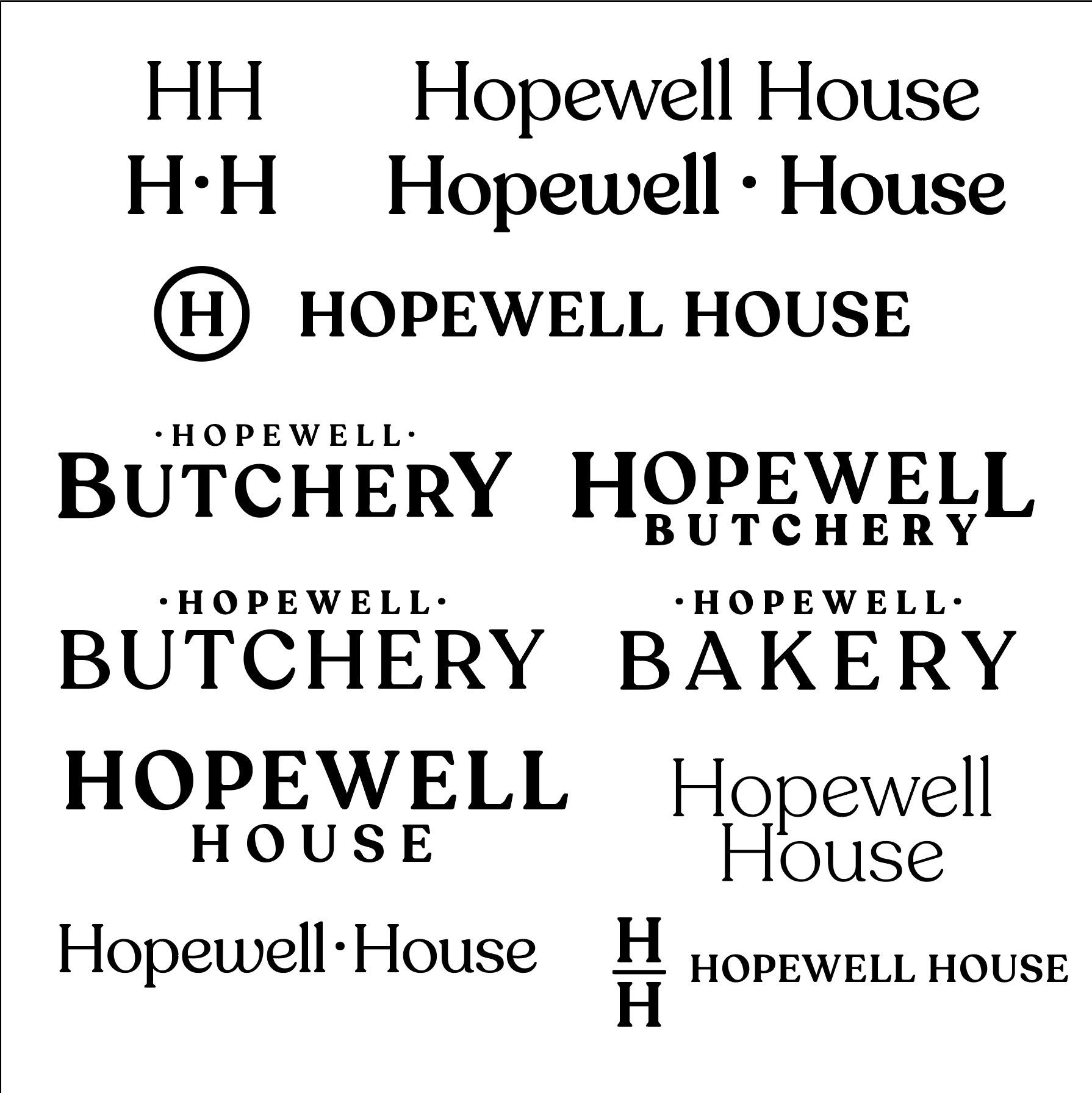
Hopewell Distillery logo process
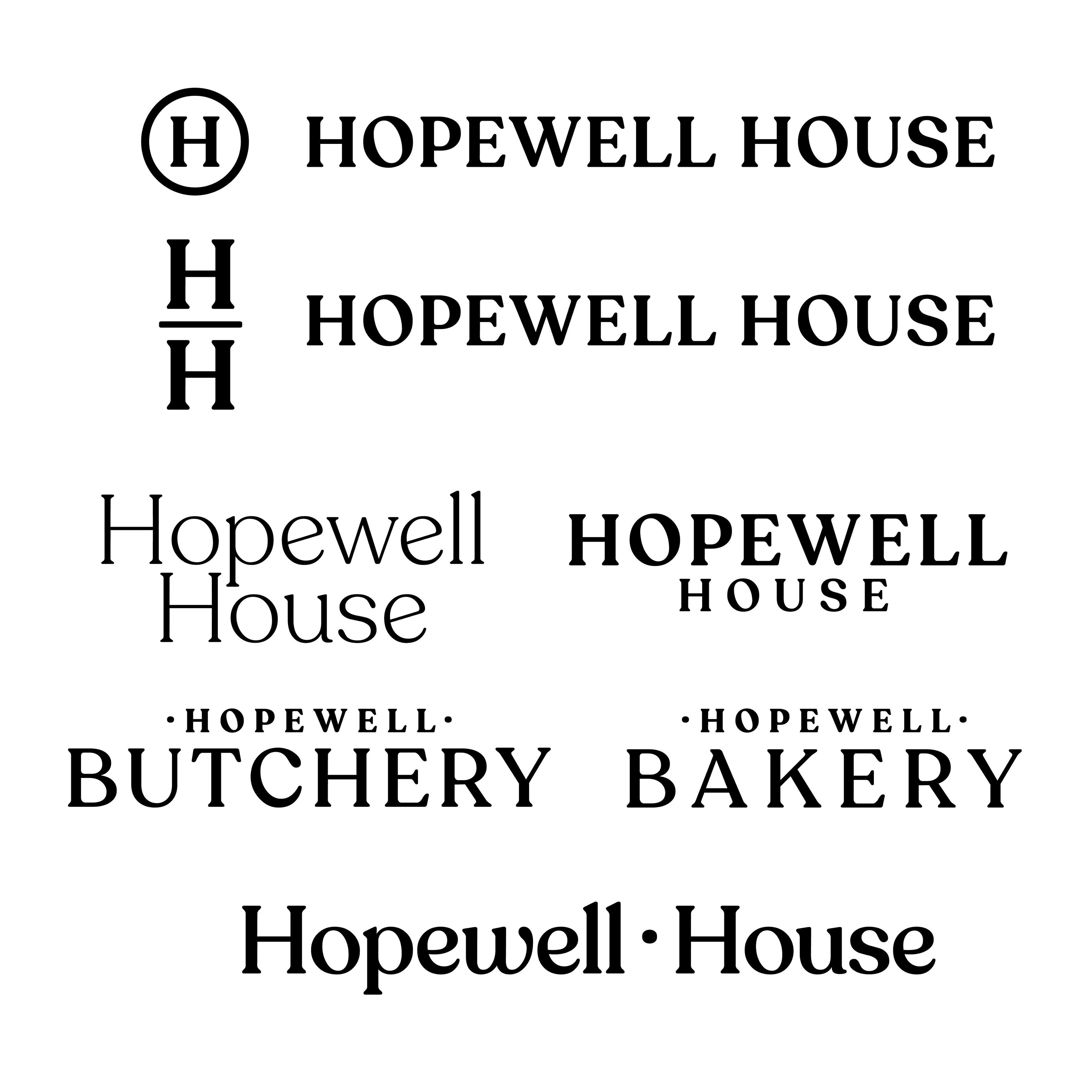
Hopewell Distillery logo process

Hopewell Distillery HD roundel
Hopewell Distillery logo
Hopewell Distillery HD roundel heritage stamp logo
400 Bottles
The first Single Batch Release came with only 400 bottles, each hand numbered. I treated that scarcity as the brief. The label layers handwritten and typewriter style type with the distillery's mark and a warm brown drawn from the colour of molasses. Paper texture, deliberate misregistration, time-worn detail. The result is something that feels made rather than manufactured, which is exactly right for a first release with that kind of story behind it.
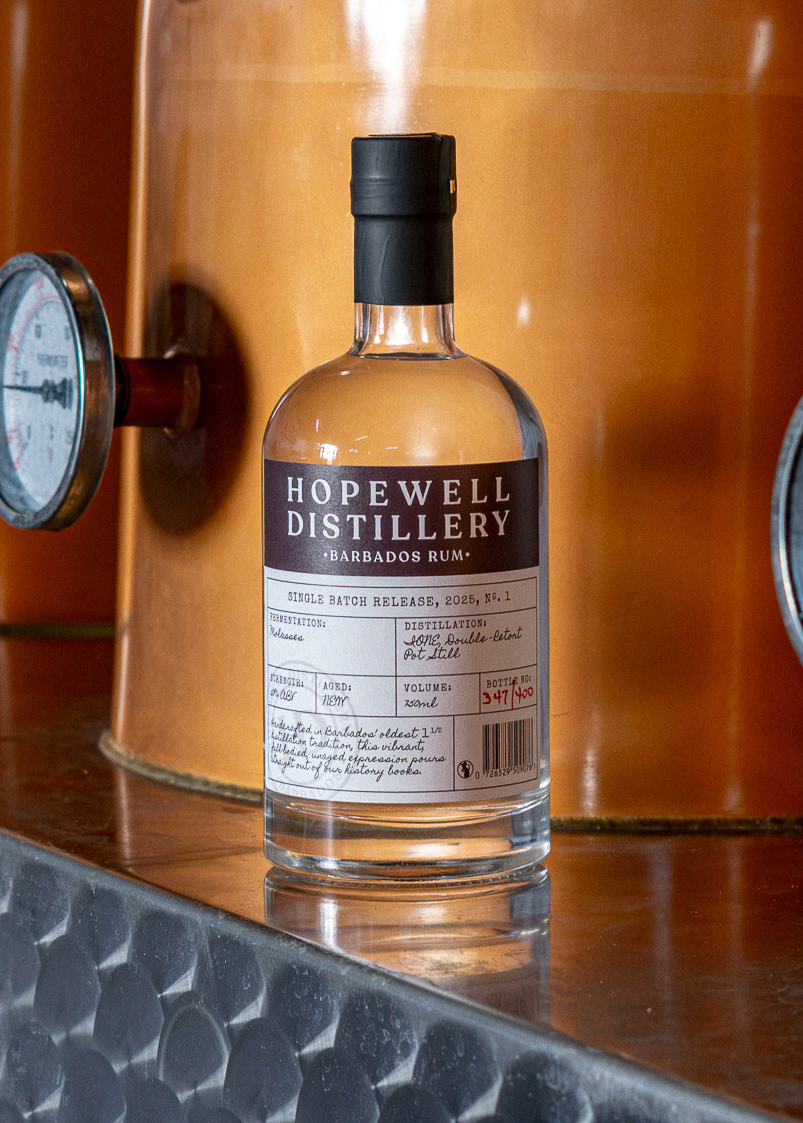
Single Batch Release No. 1, bottle 347 of 400
A System That Can Grow
The identity is built to outlast the first product line. The roundel, the material palette drawn from the steel and brass of the stills, the typographic hierarchy, all of it is structured to carry sub-brands and new expressions without losing coherence. Hopewell has a long story. The brand system is designed to keep telling it.

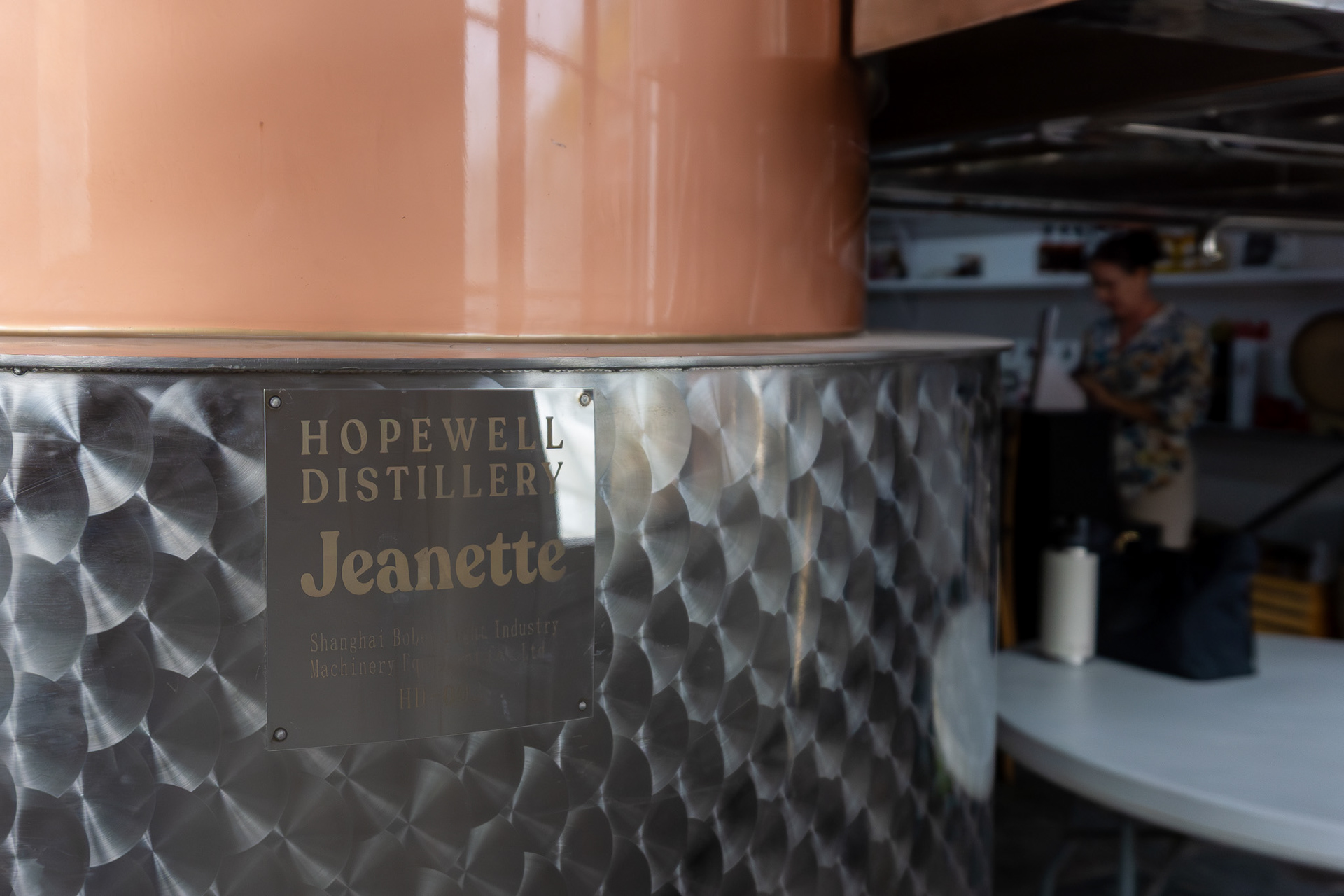
The system carried through to the equipment itself: named stills and an engraved barrel head


Reference moodboard: vintage rum and gin labels informed the typewriter-style type treatment
How It Actually Works
Creatives conversations were frequently shared with founders Greg and Vicki; concepts shared as sketches, feedback given in voice notes, decisions made in real time. It's an informal process, but a precise one. When the people commissioning the work are that close to the subject, the design gets sharper for it.
I grew up going to Hopewell. I watched the old sugar factory sit empty for years, and then watched the family turn it into something alive again. That history isn't background context for this project. It's the reason every decision had to be right. Designing for a place you know changes how you work.

The identity at estate scale: tasting bar signage on site at Hopewell
FROM LABEL TO EXPERIENCE
A brand identity on a bottle only goes so far. Once Hopewell opened its doors for tours, the work became about getting people to feel the story, not just read it on a label. That meant extending everything I'd built: the roundel and typographic system now had to hold up on signage, in a full length visitor booklet, across a magazine spread, and inside a short film, without losing the character that started with one label.

Hopewell Distillery Tour Booklet cover
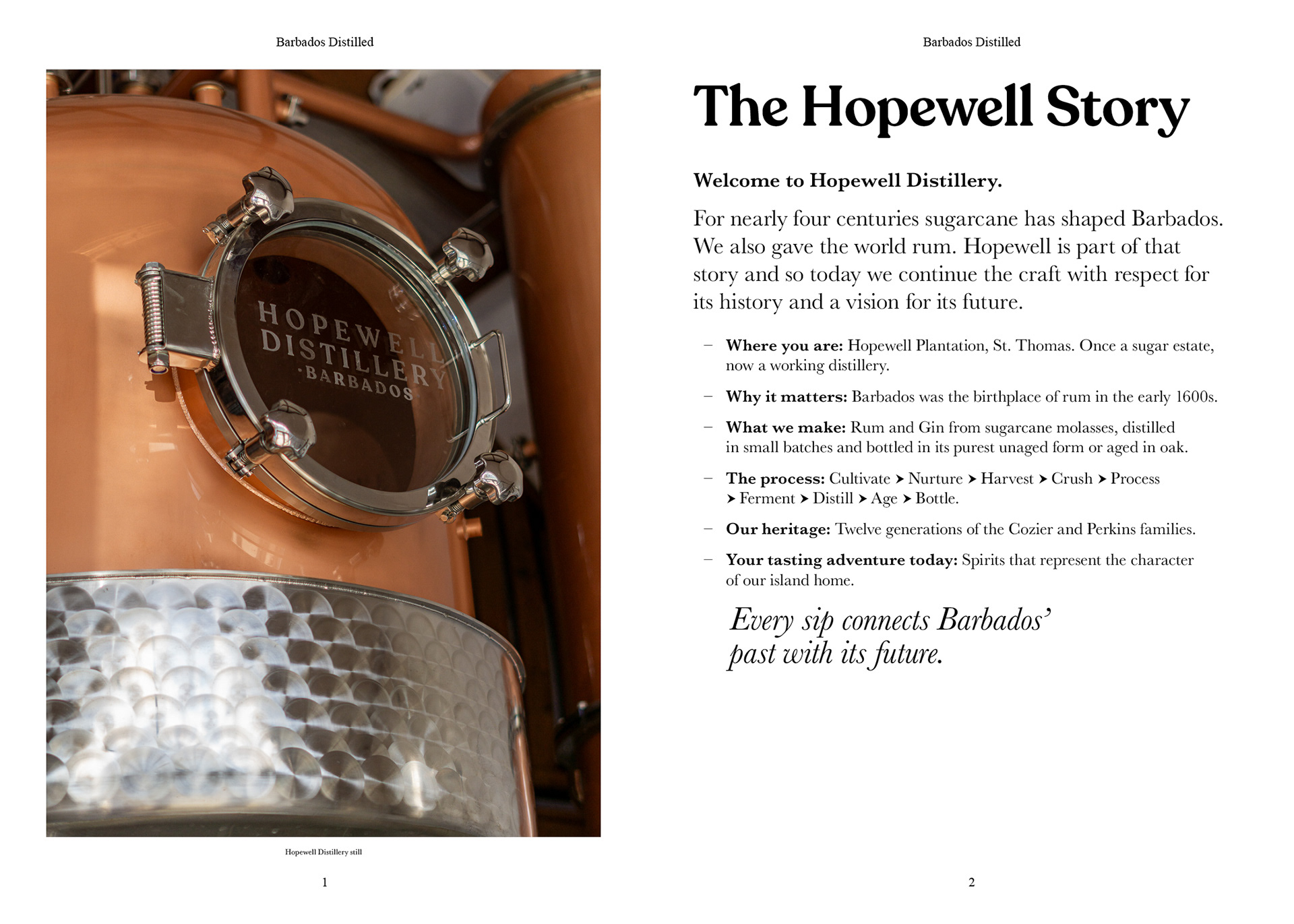
Opening spread: The Hopewell Story

The 22-page Barbados Distilled visitor booklet: the Hopewell Family Story spread
TELLING THE LONGER STORY
The visitor booklet, Barbados Distilled, was where the brand got room to breathe. Twenty two pages covering the estate's history back to 1627, how rum is actually made and an honest section on the labour that built the sugar industry Hopewell sits on. Writing that last part mattered, it would have been easy to leave it out. We didn't.
Alongside the booklet, I directed a short film tracing the history of sugar in Barbados through to Hopewell today, built from archival images and maps with a voiceover from Robin Bradford. It's part of the tour and gives the estate's history a voice, quite literally.
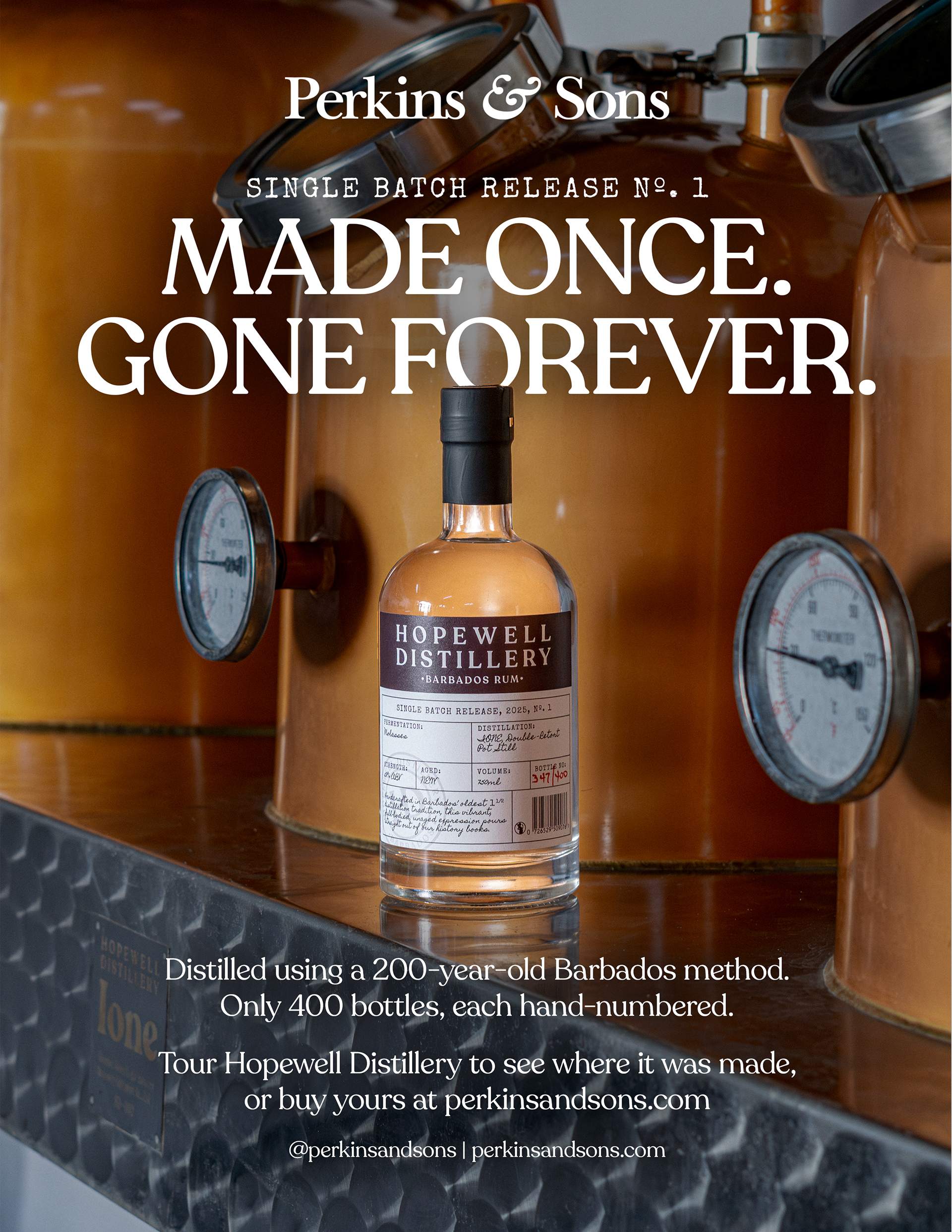
Foodie Magazine Summer 2026 full-page placement
GETTING HOPEWELL IN FRONT OF PEOPLE
The identity had to hold up in press too. I built a full page placement for Foodie Magazine around the Single Batch Release, "Made Once. Gone Forever.", alongside coverage for Tour Magazine and a new Tour page on the Perkins & Sons website to bring bookings online. Same system, same voice, different rooms.
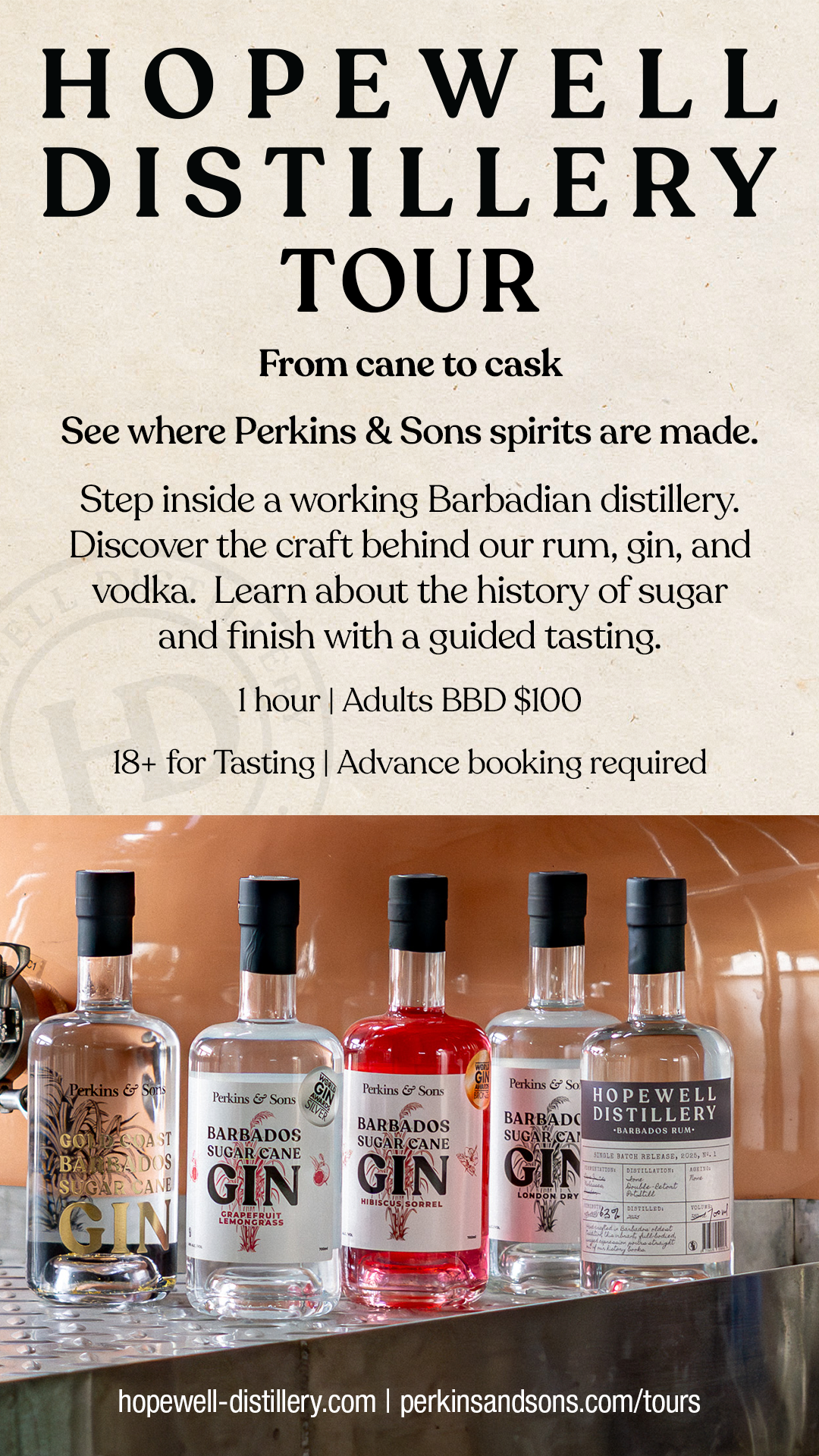

Easily shared promotional invites for WhatsApp and private channels designed to be shared

The stills at Hopewell, where every bottle in the range begins
BEYOND THE ESTATE
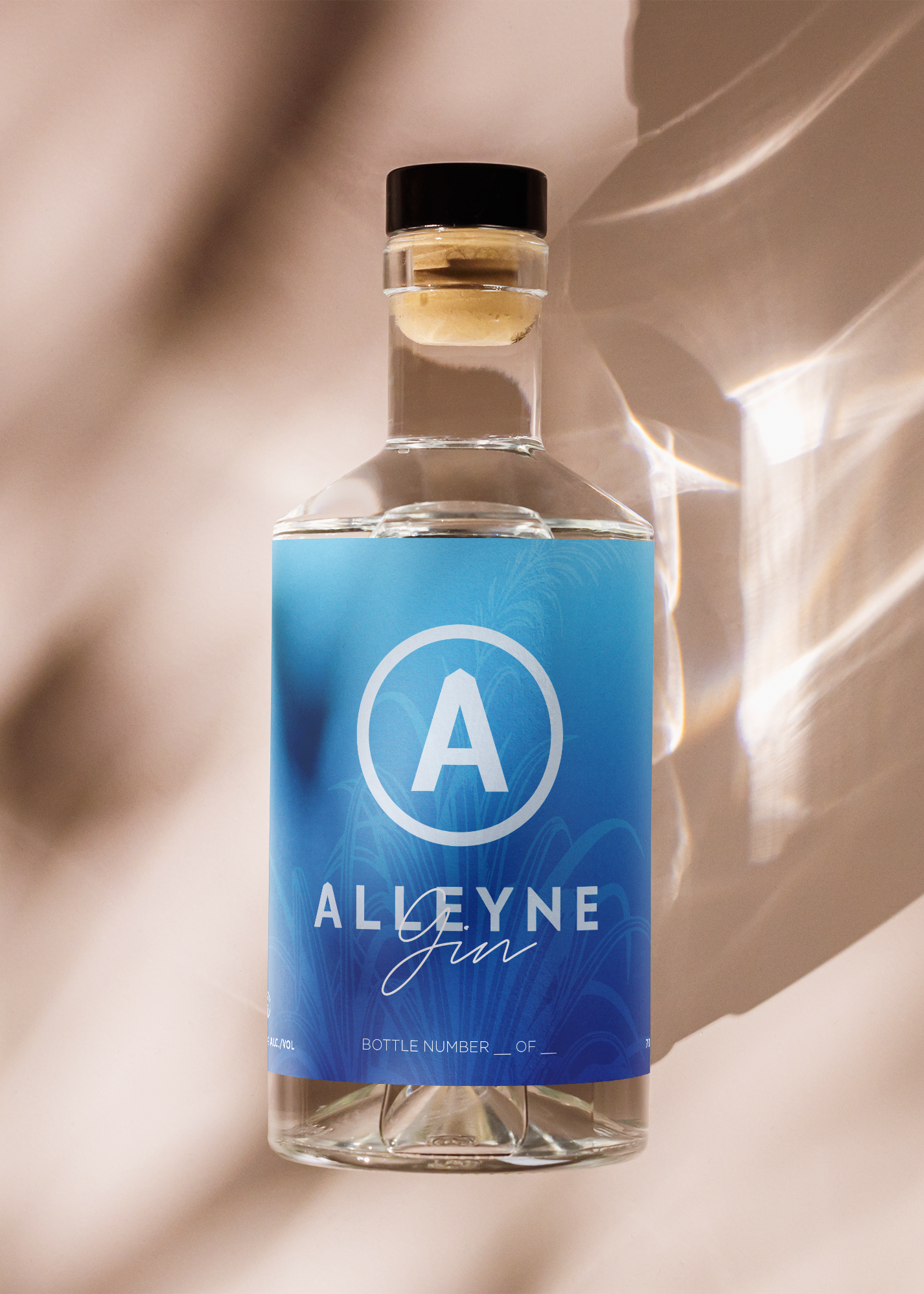
Hopewell also produces bespoke private label spirits for clients who want something made on the estate but branded as their own. Alleyne Real Estate commissioned a limited edition gin and rum, plus a rum bottled for the 2026 Barbados Legends golf event hosted by Ian Woosnam, each numbered by bottle.
I worked within Alleyne's existing "A" roundel rather than designing a new mark, and built the label system around it. The colour direction was deliberate: a gradient that reads as Barbados' sky and sea, with the rum sitting darker than the gin to echo the colour of the spirit itself. It's proof the underlying design thinking travels. The same instinct for a mark that feels pressed rather than printed works just as well on a completely different palette, for a completely different client.